News Archive
-
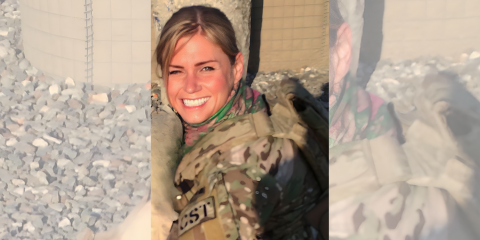
Rebekah Edmondson says it was her duty to support the members of a specially trained unit she worked alongside during her multiple deployments to Afghanistan.
-

Many people think of sustainability as only being about the environment and natural resource preservation. In fact, most probably do not think social work and climate change belong in the same sentence. But the increase in climate-related disasters and pollution disproportionately impacts marginalized communities around the world. This makes climate change a core social justice issue.
-

In 2013, Robert Hernandez, assistant teaching professor at the USC Suzanne Dworak-Peck School of Social Work, hosted a youth extravaganza working with community-based organizations to bring 125 youth to the USC campus, all of whom were on probation within the criminal justice system. While talking with them, he learned that most had grown up within a block or two of the campus but had never stepped foot on it.
-
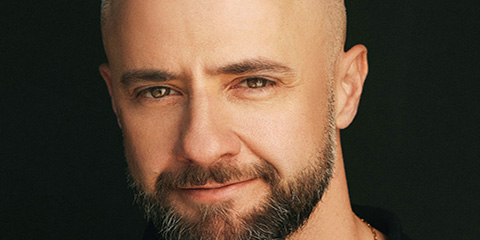
The USC Suzanne Dworak-Peck School of Social Work is excited to welcome national poverty and child welfare expert and best-selling author David Ambroz as keynote speaker for its 2024 Commencement Ceremony on May 10. Growing up homeless and then in foster care, Ambroz beat the odds through education, and has dedicated his life and career to advocacy for foster youth, child poverty and youth experiencing homelessness.
-
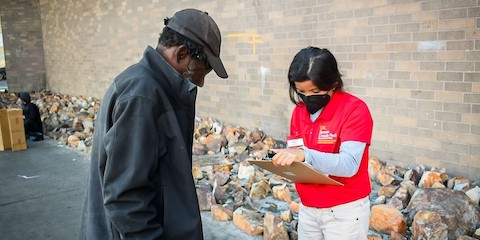
Los Angeles has more veterans experiencing homelessness than any other city in the United States. Nearly 3,500 individuals were identified as having served in a branch of the U.S. Armed Forces in the 2023 Greater Los Angeles Homeless Count report, approximately 10% of the total national population of veterans.
-

In 2016, Oludara Adeeyo, MSW’19, embarked on a major life change to heal herself from traumatic experiences, and regain a sense of optimism for what she could offer to the world. Now, she is helping other Black women to do the same.
-

After a decade working in child development, Nidia Sanguino-Gonzalez realized she had gone as far in her career as she could without a master’s degree. The early educator, mental health advocate and mother of four gave herself three years to get into the right school at the right price for her family. Her top choice was the USC Suzanne Dworak-Peck School of Social Work, and she was thrilled to receive an acceptance letter. But could she afford it?
-
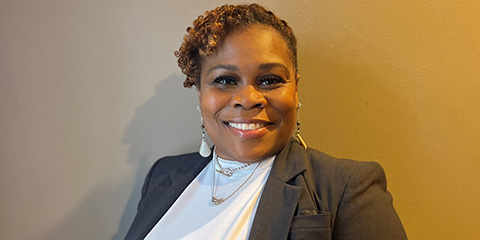
For 13 years, Regina Nadir has worked for the District of Columbia Public Schools — as a school social worker, dean, director of climate and culture, and now as a district-level social worker providing programming for special education students, and working with the families of students at private, religious and nonpublic facilities.
-
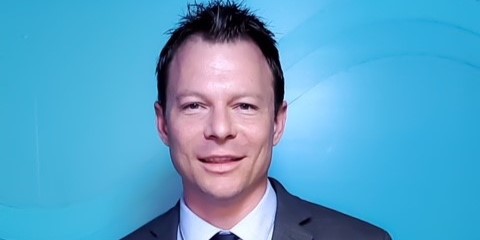
Richard Kluckow, DSW ’18, made a trip to Washington, D.C. with his family during the final semester of his doctoral studies at the USC Suzanne Dworak-Peck School of Social Work. It was the first time he visited the capitol since his eighth-grade class took a field trip, and the energy of the city excited him. He sensed that important things were happening and there were opportunities to make an impact on the world. In 2020, Kluckow landed a position with the U.S.
-
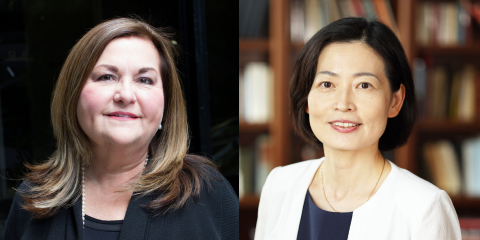
Two distinguished faculty members of the USC Suzanne Dworak-Peck School of Social Work are selected for induction into the American Academy of Social Work and Social Welfare (AASWSW) for 2024. María P. Aranda, the Margaret W. Driscoll/Louise M. Clevenger Professor in Social Policy and Administration and executive director of the USC Edward R. Roybal Institute on Aging, and Yuri Jang, professor and senior scientist at USC Roybal, receive this prestigious honor at a ceremony in Washington, D.C.